'From Fabric to Bioplastic – from Waste to Value' Partnering Meet-up
‘From Fabric to Bioplastic – from Waste to Value’ Partnering Meet-up
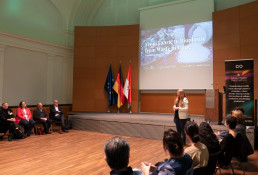
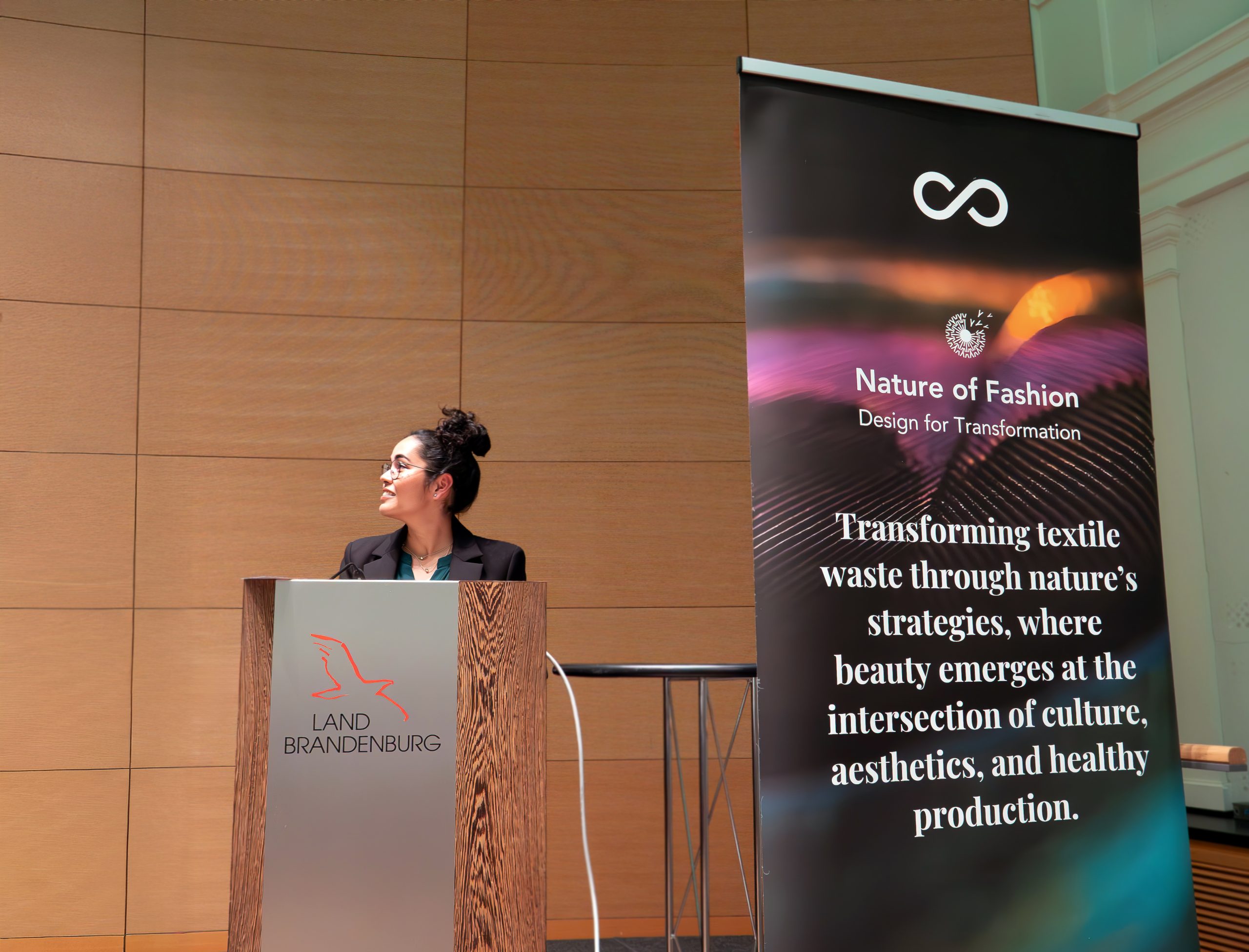
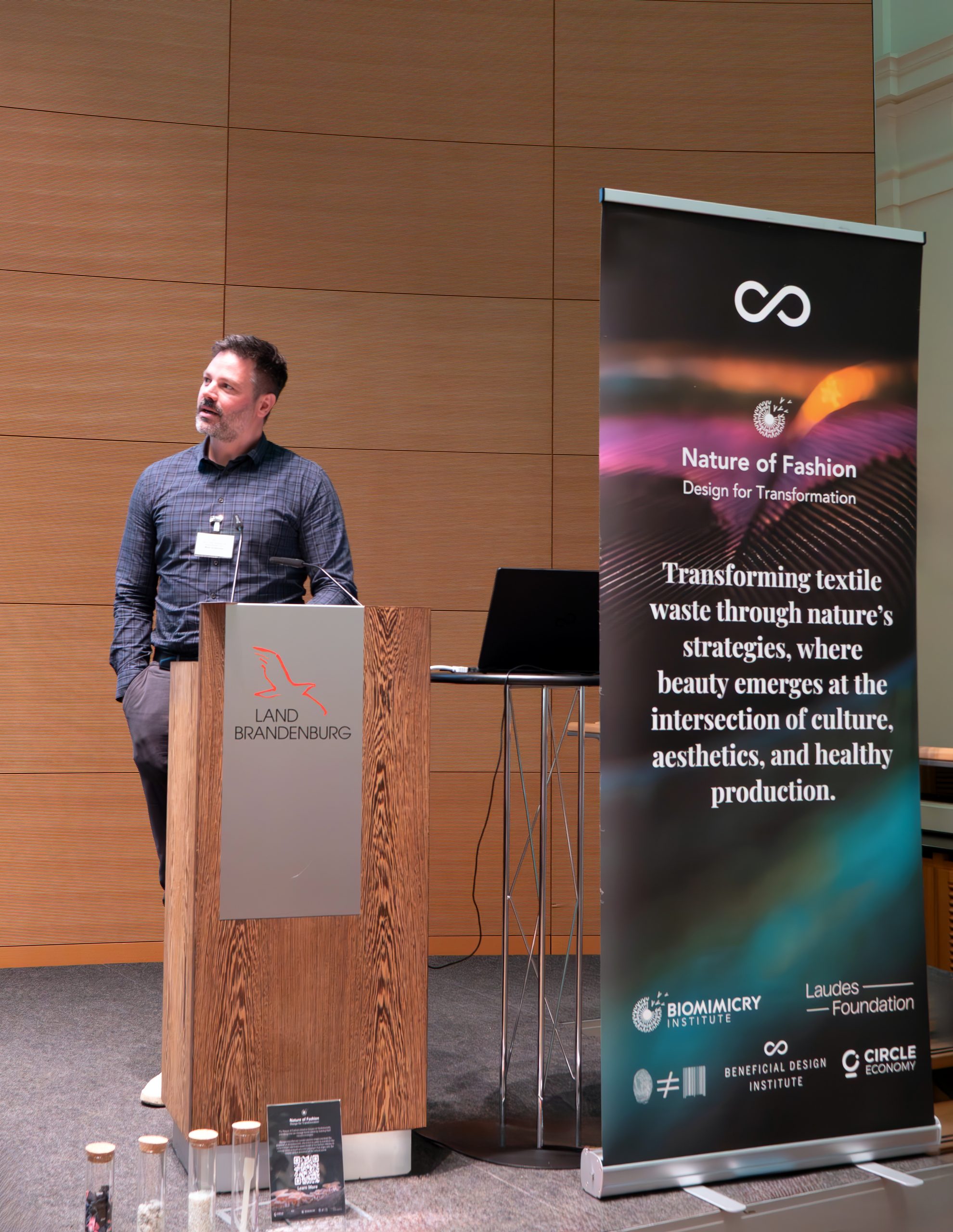
Das 6. Abfallvermeidungsforum des Landes Brandenburg, das am 25. November 2025 in der Staatskanzlei in Potsdam stattfand, machte Textilabfälle zum zentralen Thema und untersuchte die Herausforderungen und Bedürfnisse dieses schnell wachsenden Problems. Auch Lösungen wurden von Prof. Friederike von Wedel-Parlow präsentiert, wie beispielsweise unsere Initiative „Nature in Fashion – Design for Transformation“, die kritische Abfälle in wertvolle Ressourcen verwandelt.
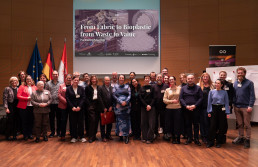
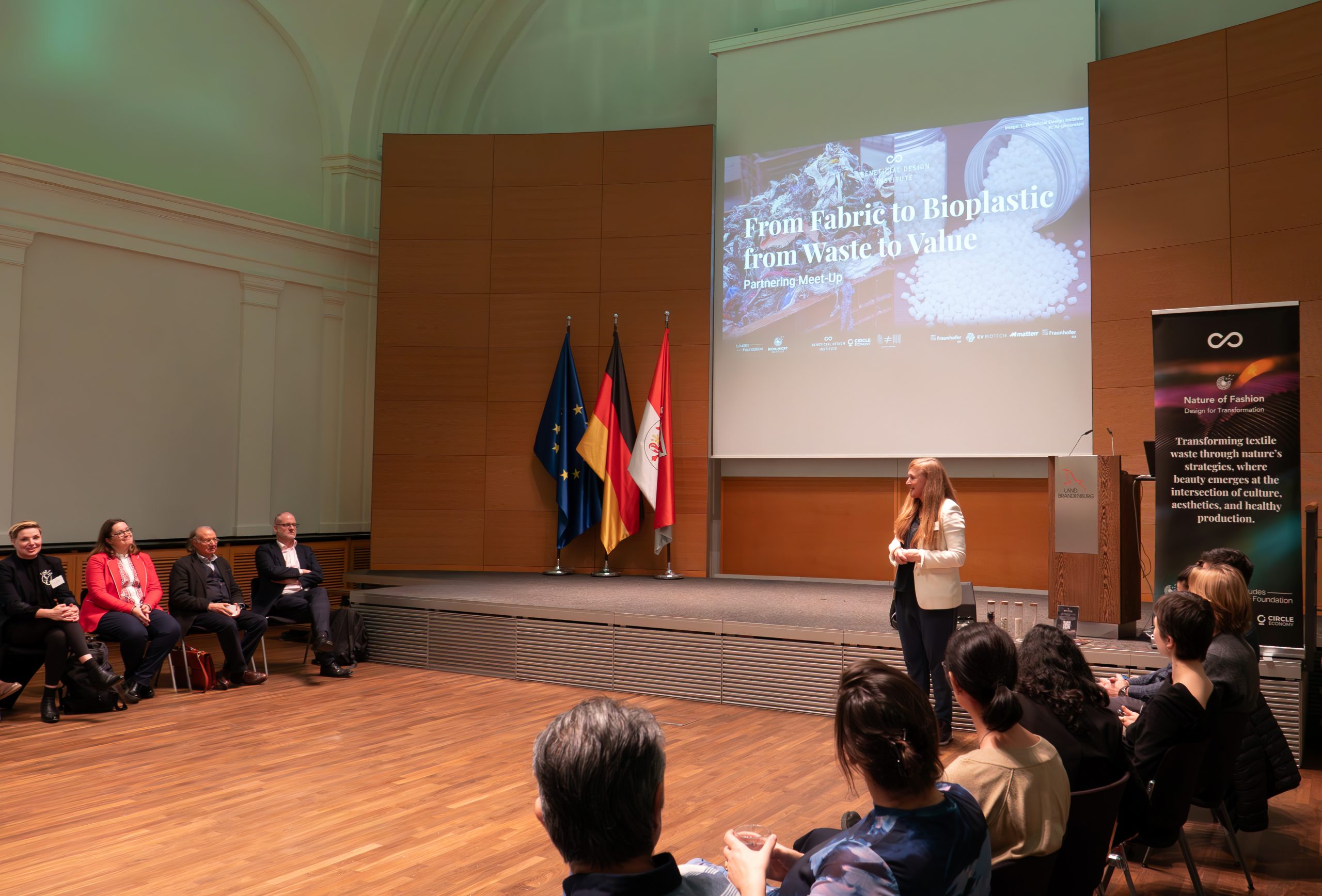
Dies war der perfekte Rahmen für das Beneficial Design Institute, um das erste Partner-Treffen der Initiative unter dem Motto „From Fabric to Bioplastic – from Waste to Value” zu veranstalten.
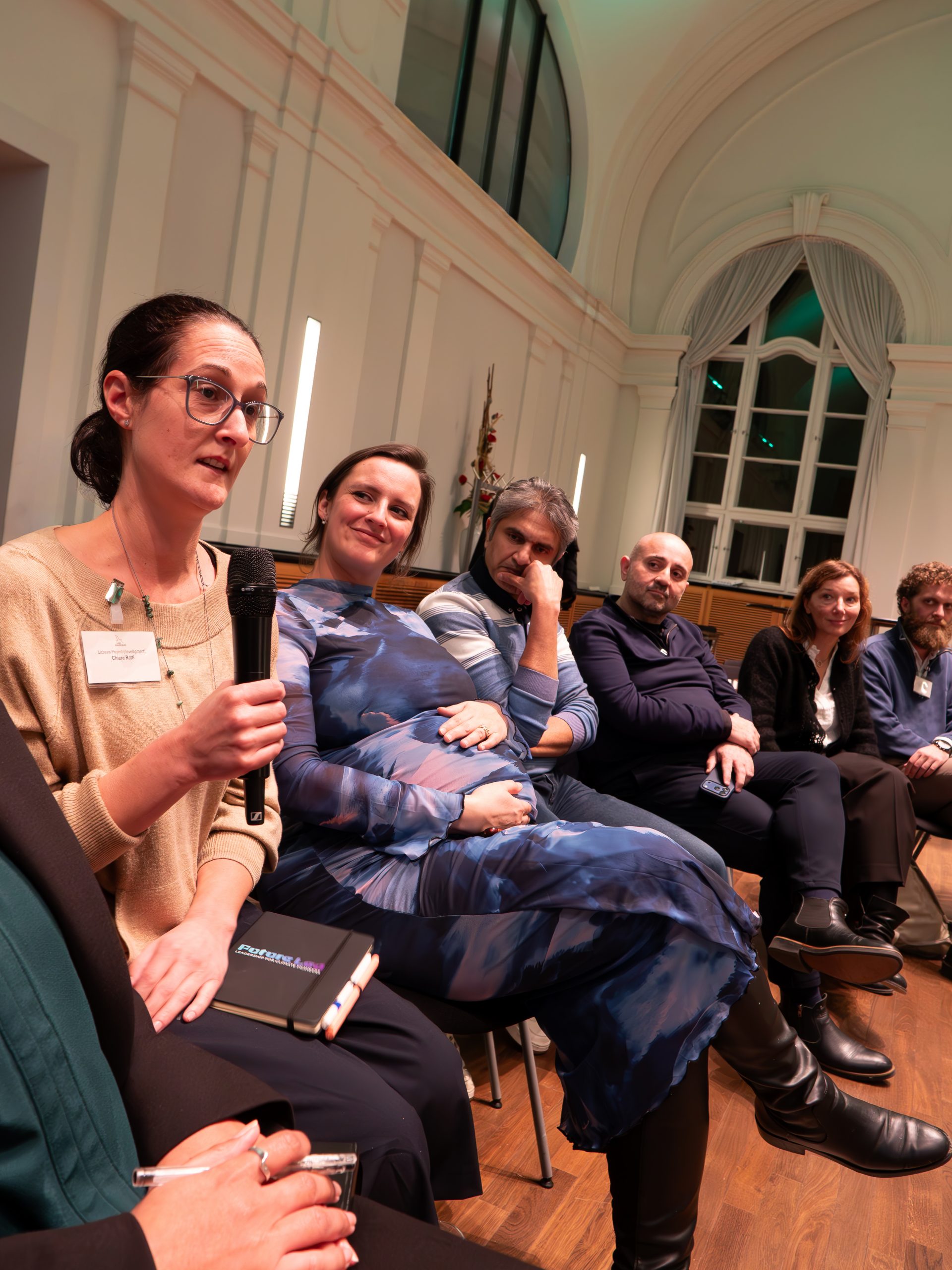
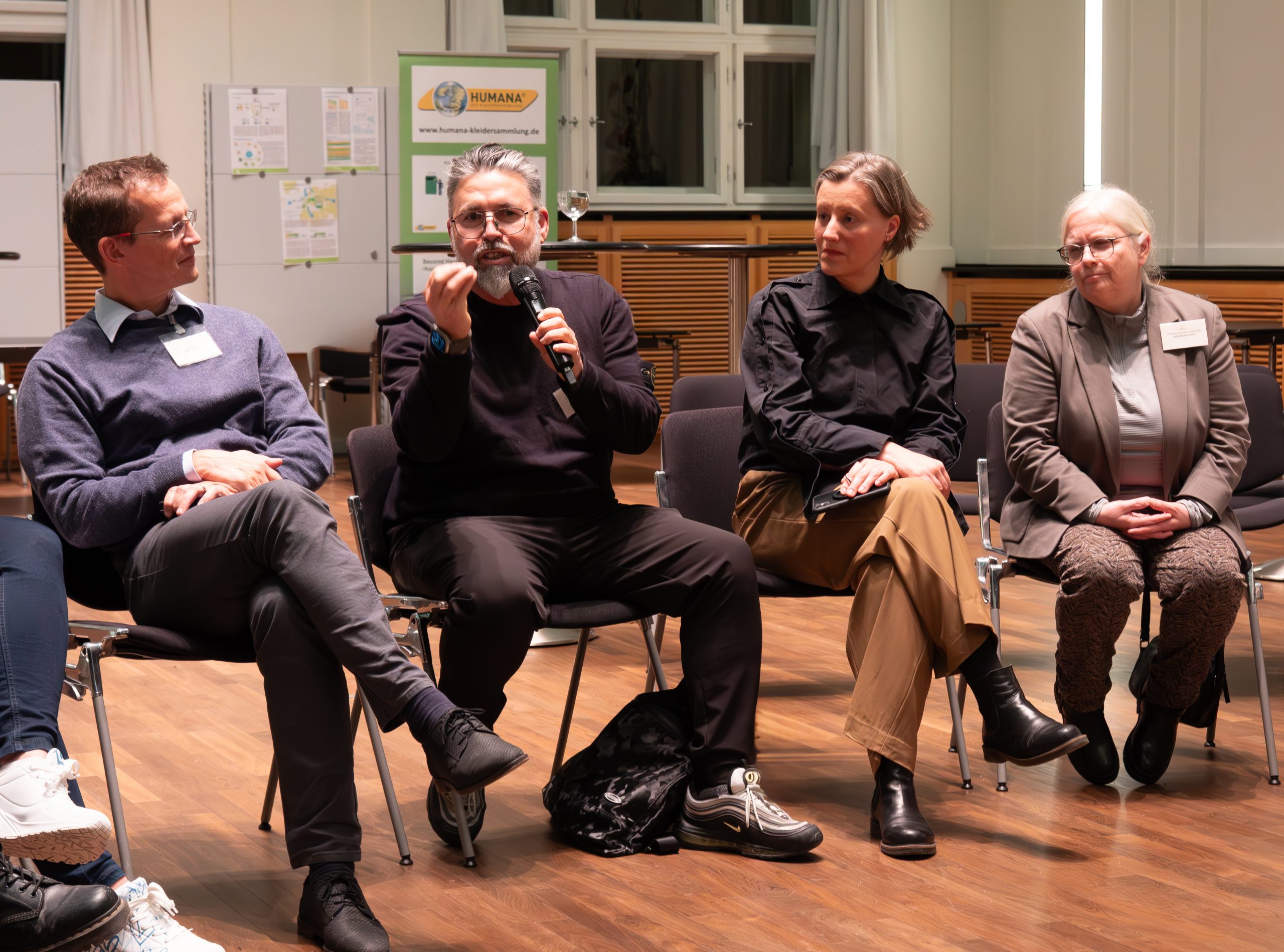
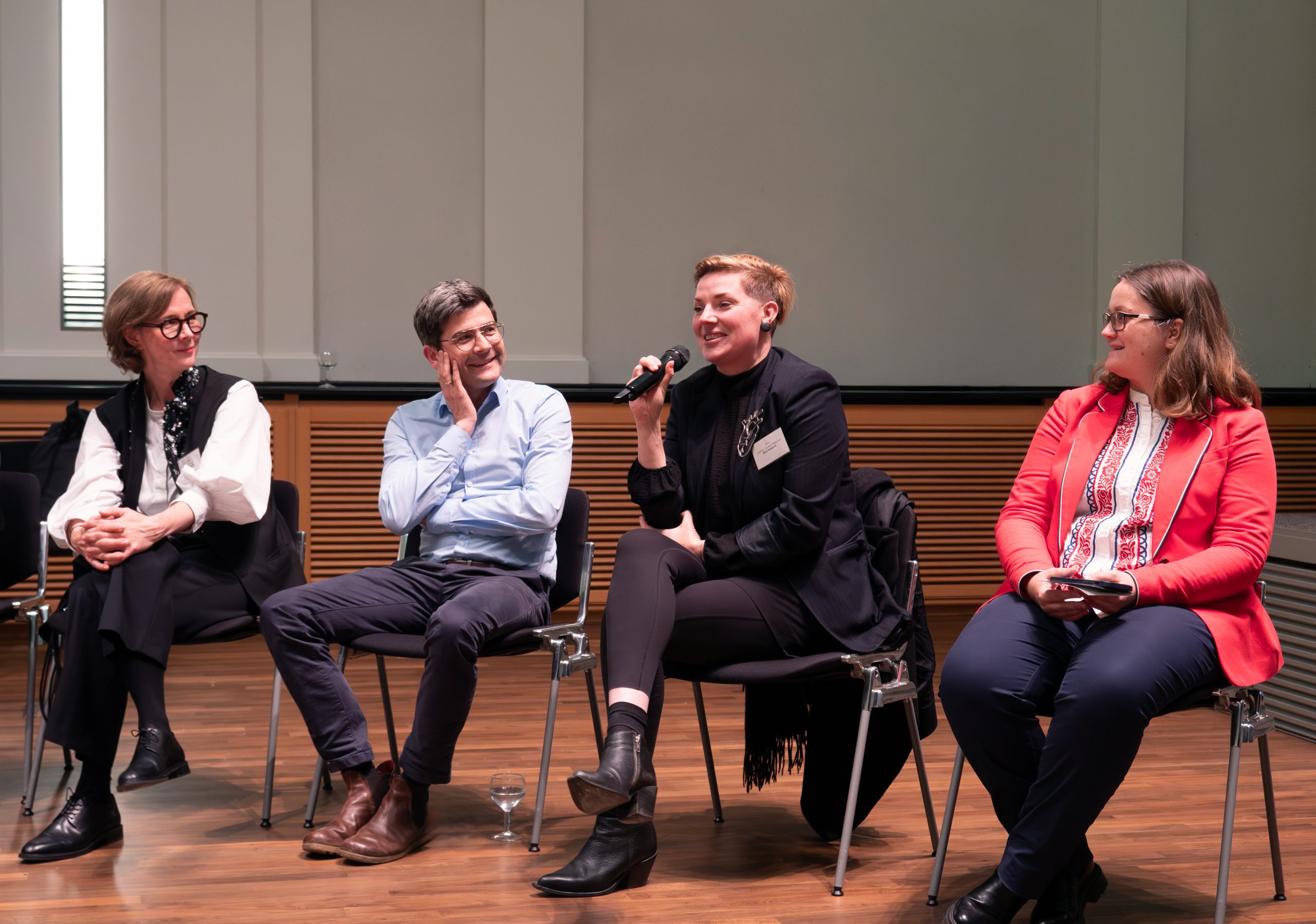
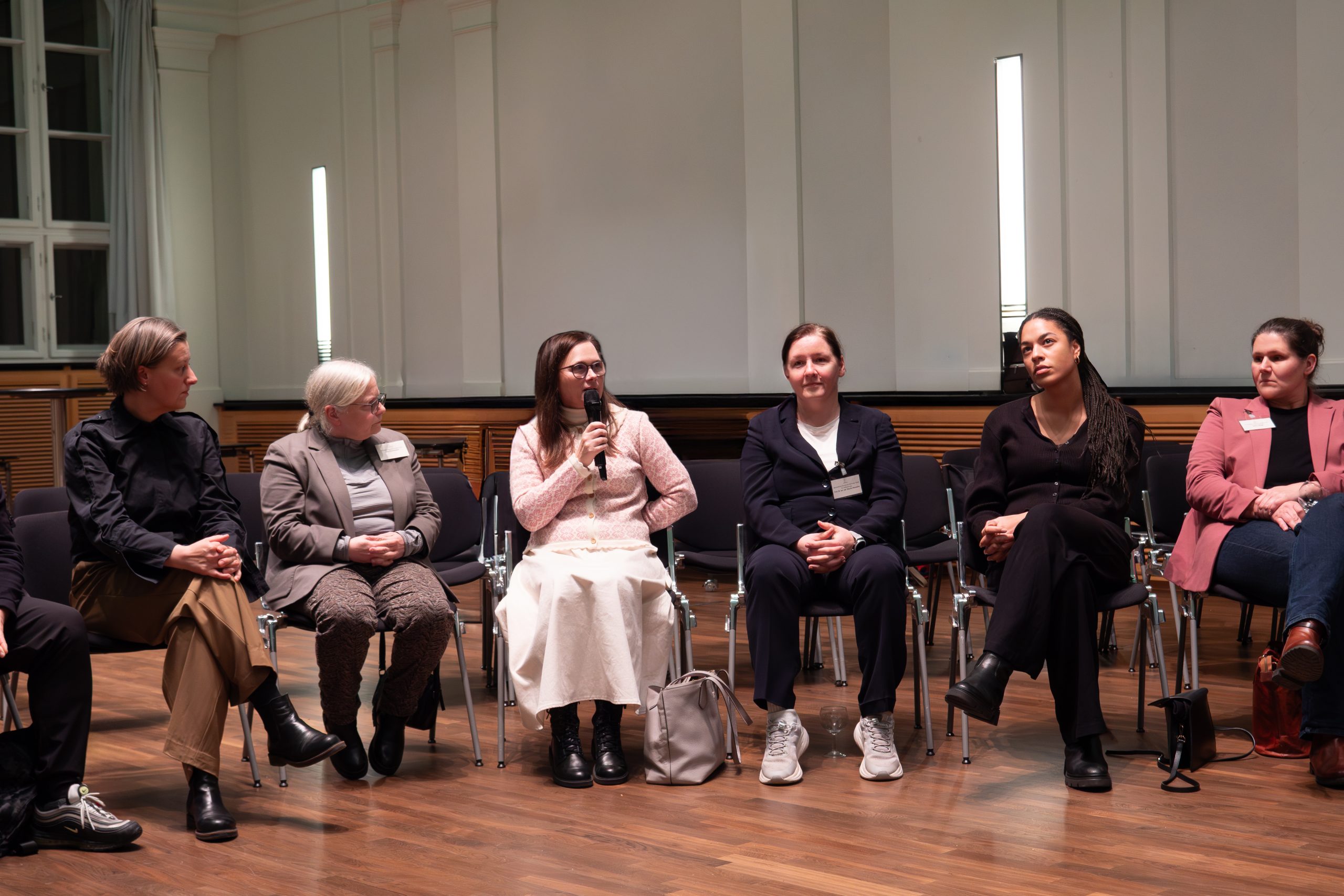
Gemeinsam mit Vertretern aus Wissenschaft, Industrie, Design und Politik tauschten wir Erkenntnisse aus unserer Machbarkeitsstudie TexPHB – Biokunststoffe aus Textilabfällen aus, feierten, wie weit uns die Reise bereits gebracht hat, und eröffneten den Raum für einen Dialog über Synergien, Infrastrukturbedarf und regionales Innovationspotenzial.
In den Diskussionen kam eine Botschaft deutlich zum Ausdruck: Es gibt eine starke kollektive Dynamik, um die regionale Wertschöpfung, die Verwertung von Textilabfällen und biobasierte Innovationen in Berlin-Brandenburg voranzutreiben. Das Treffen hob die Chancen hervor, die eine zirkuläre Bioökonomie für die Region und darüber hinaus eröffnen könnte.
Ein herzliches Dankeschön an alle Teilnehmer für Ihre Erkenntnisse, Fragen und Perspektiven. Ihre Beiträge stärken die gemeinsame Vision einer Kreislaufbioökonomie für Mode und Textilien, in der es, genau wie in der Natur, keinen Abfall gibt.
Unser Dank gilt auch unserem TexPHB-Team und unseren Partnern: Jens Balko & Marion Stage (Fraunhofer-Institut für Angewandte Polymerforschung IAP), Tim Seedorf (matterr), Nicole Kiefer (Mewa), Moritz Schäpsmeier (SITEX) und Annett Kaplow (Textilhafen). Wir bedanken uns auch herzlich bei unserer Partnerin von „Nature of Fashion – Design for Transformation”, Asha Singhal (The Biomimicry Institute), die das Konzept des Designs für die Zersetzung zum Leben erweckt hat, und bei Linda Dijkshoorn (EV Biotech), die im Rahmen der Forschung mit unserem niederländischen D4T-Partner Circle Economy ihre Innovationen und Marktkenntnisse mit uns geteilt hat.
Wir freuen uns darauf, diese Gespräche fortzusetzen und gemeinsam die nächsten Schritte einer regionalen Kreislaufbioökonomie für Mode und Textilien zu gestalten!



From Textile Waste to Bioplastic – Exploring the Feasibility
From textile waste to bioplastic. Is it feasible?
New prospects for the circular economy in Brandenburg
Joint press release by Fraunhofer IAP and Beneficial Design Institute / 25 November 2025
Textile waste could serve as a valuable source of raw materials for sustainable plastics in the future, according to the joint TexPHB feasibility study conducted by the Fraunhofer Institute for Applied Polymer Research IAP, Beneficial Design Institute GmbH and matterr GmbH. The study will be presented to the public for the first time at a network meeting on 25 November 2025 at the State Chancellery in Potsdam.
Since Overshoot Day on July 24, 2025, humanity has used up its resource budget for this year. The textile industry contributes significantly to this: it causes around eight to ten percent of global CO₂ emissions. In the TexPHB feasibility study funded by the Ministry of Economic Affairs, Labour, Energy and Climate Protection (MWAEK), the partners show how this balance can be improved.
Feasible! From PET waste to biopolymer PHB
The approach: textiles that are difficult to recycle, such as mixed polyester-containing waste from fast fashion, workwear or industrial cleaning textiles, which are usually incinerated, are converted into the fully biodegradable bioplastic polyhydroxybutyrate (PHB).
Together with textile services and textile waste companies, the Beneficial Design Institute investigated how textile waste previously destined for incineration could be recycled. The process developed by matterr GmbH for the hydrolysis of polyethylene terephthalate (PET), in which the central raw materials of PET – terephthalic acid and ethylene glycol – are recovered in their original quality, was tested for the first time for these critical material fractions. Scientists at Fraunhofer IAP used the ethylene glycol produced as a nutrient medium for wild-type bacteria, which convert it into the biopolymer polyhydroxybutyrate (PHB). At the Biopolymers Processing Centre in Schwarzheide, the PHB obtained was further processed and tested for its material properties. "We have thus demonstrated that PET waste from the textile industry can be converted into a biodegradable polymer using chemical and biotechnological processes, which could replace petroleum-based plastics in the long term," says Dr Maren Wandrey, biochemist at Fraunhofer IAP.
PHB: biodegradable and versatile
As part of the study, Beneficial Design Institute GmbH identified possible fields of application for the biopolymer. "PHB is completely biodegradable and biocompatible. Compared to other bioplastics, PHB also has a good barrier effect against oxygen and moisture. This means it offers great potential for products that are intended to degrade in the environment or in the body – for example, for medical applications, geotextile for erosion protection or agricultural products," explains Prof. Friederike von Wedel-Parlow, Managing Director of Beneficial Design Institute GmbH.
A recently published strategy paper translates the consortium's findings into concrete recommendations for policy makers in Brandenburg. It comprises a multi-stage package of measures designed to lay the foundations for a textile circular economy in Brandenburg.
Networking for regional value creation and textile transformation
Entitled "From Fabric to Bioplastic – From Waste to Value", the TexPHB market study and strategy paper will be presented on 25 November 2025 at a partnering meet-up in the State Chancellery in Potsdam. The event will take place following the 6th Brandenburg Waste Prevention Forum and will bring together stakeholders from business, research, politics and design. The aim is to initiate cooperation and investment that will drive forward the sustainable transformation of the textile and waste management industry in Brandenburg.
Prospects for Brandenburg's bioeconomy
The TexPHB project exemplifies how textile waste can be converted into high-quality, biodegradable plastics – and what opportunities this opens up for a circular economy. The results of the study will serve as a basis for further research and development work. In the long term, the aim is to create a continuous process chain – from textile waste recycling to the production of new biopolymers.
Machbarkeits- und Potenzialstudie: „Anwendungen für das Biopolymer Polyhydroxybutyrat (PHB) aus Textilabfällen“ (TexPHB)
Forschungskonsortium
Fraunhofer Institut für angewandte Polymerforschung IAP
Beneficial Design Institute GmbH
Textile industry partners:
Sitex – Textile Dienstleistungen Simeonsbetriebe GmbH
MEWA Textil-Service SE & Co. Management OHG
IZ Circular Textiles GmbH / SOEX
Textilhafen der Komm & Sieh gGmbH
Gefördert durch
Project Initiators
Beneficial Design Institute GmbH
We are a design research institute specialising in eco-design and sustainability, based in the Berlin-Brandenburg metropolitan region. We develop holistic innovation concepts and circular product solutions for the textile and fashion industry, usually with design at the beginning of the textile chain. As the driving force behind the ‘TexPHB’ feasibility study and project developer of the regional initiative ‘Nature of Fashion_Design for Transformation’, we start at the end for the first time and combine design, material and circular economy expertise with practical implementation – from research to market readiness. The aim is to regeneratively transform the industry through biocompatible materials, new value creation paths and consistently nature-inspired design.
„Nature of Fashion_Design for Transformation“ is a global initiative led by the Biomimicry Institute and funded by the Laudes Foundation, with regional projects in Berlin-Brandenburg, the Netherlands, and the Global South (Accra, Ghana). The initiative aims to rethink how textile waste is managed through biological and biotechnological innovation. Instead of a linear “Take-Make-Waste” model, it follows a circular “Break Down to Build Up” principle. Its focus is on transforming mixed, low-value textile waste into valuable, biocompatible materials suitable for industrial use across multiple sectors and safely reintegrated into natural cycles. The initiative seeks to raise awareness for regenerative, nature-inspired alternatives within the global fashion system.
Closing the Loop in the Textile Economy: Value Creation in Brandenburg
Closing the Loop in the Textile Economy: Value Creation in Brandenburg
Joint Press Release by Fraunhofer IAP and Beneficial Design Institute / October 13, 2025
How can the state of Brandenburg benefit from a circular textile industry? This question is addressed in the new policy paper "Closing the loop in the textile industry: Value creation in the state of Brandenburg." Based on the „TexPHB“ feasibility study funded by the Brandenburg Ministry of Climate Protection, it shows how textile waste can be integrated into new value chains.
The textile industry is one of the most resource-intensive sectors and generates significant amounts of waste and emissions. In 2020 alone, approximately 6.95 million tonnes of textile waste were generated in the EU. Worldwide, 92 million tonnes of textile waste end up in landfills in the Global South or in incinerators every year. Mixed polyester-containing waste from fast fashion, workwear or industrial cleaning textiles in the lowest waste category is among the most difficult residual materials to recycle. The EU's Circular Economy Strategy therefore promotes circular processes in the textile sector.
From Feasibility Study to Policy Recommendation
In a joint feasibility study, the Fraunhofer Institute for Applied Polymer Research IAP at Potsdam Science Park, Beneficial Design Institute GmbH and matterr GmbH (formerly RITTEC 8.0 Umwelttechnik GmbH) investigated how polyester-containing waste textiles can be converted into the bioplastic polyhydroxybutyrate (PHB).
"With our innovative matterr process, we recover the monomers terephthalic acid (TA) and ethylene glycol (EG) in virgin quality from polyester-containing textile waste – suitable for the production of new polyester," explains Dr. Tim Seedorf, Head of Research & Innovation at matterr GmbH. "We have also shown that the ethylene glycol obtained can be converted into the biopolymer PHB with the help of bacteria," adds Dr. Maren Wandrey, biochemist at Fraunhofer IAP. An analysis by the Beneficial Design Institute further shows that establishing a textile hub in Brandenburg can make a significant contribution to strengthening the regional circular economy through the sustainable use of textile waste and the establishment of new value chains.
The policy paper translates the consortium's findings into concrete recommendations for political decision-makers in Brandenburg.
PHB: Benefits for Economy, Society, and the Environment
PHB zählt zu den Biokunststoffen, die vollständig biologisch abbaubar, resorbierbar und biokompatibel sind. Prof. Friederike von Wedel-Parlow vom Beneficial Design Institute betont: »PHB vereint ökologische Vorteile mit wirtschaftlichem Potenzial in neuen Märkten. Unsere Untersuchungen haben deutlich gemacht, dass Design Wissenschaft und Industrie gemeinsam Lösungen entwickeln können, die diese Vorteile für Gesellschaft und Wirtschaft nutzbar und Ecodesign-Denken zu einem Erfolg, auch für Brandenburg, machen.«
The bioplastic has a wide range of applications, especially where materials remain in the environment permanently – for example, in water, soil or the human body. Examples include geotextiles for erosion control, artificial shoreline reinforcement, tree and branch protectors, or medical products such as suture material.
Action options for a circular textile economy
The policy paper recommends a multi-stage action plan to lay the foundation for a circular textile economy in Brandenburg. It comprises six key recommendations. Clima State Secretary Dr. Haase explains: "The goal is to retain value creation in the region, establish qualified jobs and position Brandenburg as a model region for this EU initiative. The project consortium's policy paper and the preliminary study results contribute to bringing together ecological sustainability and economic strength in Brandenburg."
The results also have supra-regional significance with potential for close cooperation between Brandenburg and partners in Poland and the Netherlands. Through these collaborations, the state can strengthen its position as a pioneer in the circular economy and build European value chains that incorporate design-driven added value.
Key Recommendations from the Policy Paper
- Support for business start-ups and regional textile biorefineries to enhance resource efficiency
- Funding programs for R&D on innovative textile waste recycling technologies
- Establishment of a competence cluster for data-driven textile circularity
- Promotion of digital data collection along the entire textile value chain
- Qualification of companies for the upcoming Ecodesign Directive 2026
- Integration of local companies into European value chains under the EU “Regional Innovation Valleys for Circular Economy” initiative
Please fill in your email address to download the document.
Project Initiators
Beneficial Design Institute GmbH
We are a design research institute specialising in eco-design and sustainability, based in the Berlin-Brandenburg metropolitan region. We develop holistic innovation concepts and circular product solutions for the textile and fashion industry, usually with design at the beginning of the textile chain. As the driving force behind the ‘TexPHB’ feasibility study and project developer of the regional initiative ‘Nature of Fashion_Design for Transformation’, we start at the end for the first time and combine design, material and circular economy expertise with practical implementation – from research to market readiness. The aim is to regeneratively transform the industry through biocompatible materials, new value creation paths and consistently nature-inspired design.
„Nature of Fashion_Design for Transformation“ is a global initiative led by the Biomimicry Institute and funded by the Laudes Foundation, with regional projects in Berlin-Brandenburg, the Netherlands, and the Global South (Accra, Ghana). The initiative aims to rethink how textile waste is managed through biological and biotechnological innovation. Instead of a linear “Take-Make-Waste” model, it follows a circular “Break Down to Build Up” principle. Its focus is on transforming mixed, low-value textile waste into valuable, biocompatible materials suitable for industrial use across multiple sectors and safely reintegrated into natural cycles. The initiative seeks to raise awareness for regenerative, nature-inspired alternatives within the global fashion system.